
Category: science kits

Thursday, 27 June 2013

08:40 – It’s been a week since Barbara’s dad died, and things are gradually returning to some semblance of normal. Barbara went out to dinner with a couple of her friends from the library last night. Colin and I stayed home and watched Heartland re-runs.

I got another kit order from the UK yesterday, the second this week. I always explain that we can ship kits only within the US and then refund their entire payment. We take a $0.30 loss on each refund, but it’s not worth trying to explain to the would-be buyer why we’re refunding them $0.30 less than their original payment.

I’ve actually thought about using Bongo to handle foreign shipments, but it’s unclear to me how (or if) that would work since our kits include materials that the IATA defines as dangerous goods for shipping purposes. If it worked, it’d be ideal. I could simply accept orders as usual and ship kits as usual to Bongo’s Connecticut facility. They would then forward the package to the buyer in whatever country, charging the buyer for the shipping and handling fees and taking care of all the customs stuff.

We’re also getting an increasing number of queries and orders from schools, public and private, as well as virtual schools and distance-learning programs. I got us set up yesterday as an approved vendor for a virtual school program run by a small-town school system that supports 200 to 300 distance-learning families. The interesting thing about this arrangement is that the school system coordinates things, but which curricula/kits to use is up to the individual families. Each family decides which curricula/kits they want to use, and lets the school system know. The school system then orders and pays for the materials, which are shipped to them. On a specified day, the families all show up at the school to pick up their materials. So at this point I have no idea of how many kits we’ll sell to that group. It could be 20 or 30, or 2 or 3, or even none at all.

Work continues on building more science kits.

Read the comments: 20 Comments

Wednesday, 26 June 2013

09:55 – I ended up filling those 150 bottles of glycerol yesterday, along with several hundred other bottles. Today I’ll make up more chemicals for the forensic kits and fill a bunch more bottles.

Meanwhile, Obama seems determined to prove that the country cannot survive eight years of Bush followed by eight years of him. Incredibly, his latest idiocy is a War on Coal. Given that we and other animals exhale carbon dioxide, I’m expecting Obama’s next move to be a War on Breathing. At this point, the best we can hope for is that the Republicans take majorities in both houses in the 2014 elections and do their best to gridlock government entirely. That, and repeal ObamaCare before it destroys our entire health-care system.

Actually, I wish our Founding Fathers had borrowed one more idea from Republican Rome. Any Tribune of the Plebs could stop any proposed action or law simply by standing up and announcing, “Veto” (“I forbid”). There was no appeal or override of a veto. Once a Tribune of the Plebs vetoed something, it was off the table. If a law was already in effect, a veto voided it. The Founding Fathers should have given the same veto power to every member of the House of Representatives, which is (or should have been) our College of the Tribunes of the Plebs.


Read the comments: 40 Comments

Tuesday, 25 June 2013

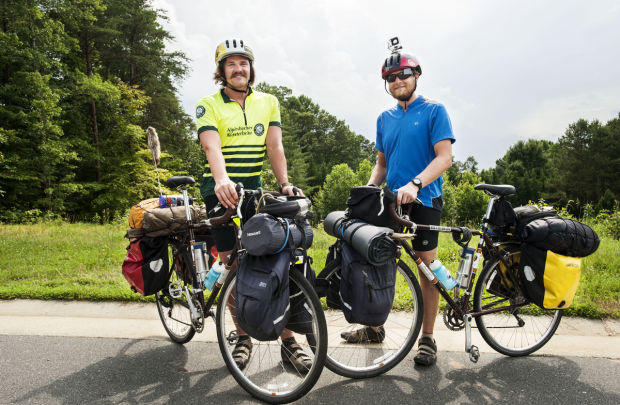
09:44 – Cops consider eyewitness identifications suspect, and particularly suspect if the man in question has a beard. Here’s a good example of why. When I saw the front page of the newspaper this morning, my first thought was, “Why is there a picture of my friend Paul Jones on the front page?” When I showed it to Barbara, she also thought it was Paul.

It’s not Paul, of course, but it sure looks like him. If I’d seen the picture without having the caption for context, it wouldn’t even have crossed my mind that it wasn’t Paul.


I just shipped a forensic science kit this morning, and realized that I’m down to only two remaining in stock. Urk. I’d been working on chemistry kits, but it’s time to build a batch of 30 more forensic science kits.


15:47 – I’m filling glycerol bottles. Very slowly. They’re 15 mL narrow-mouth bottles, the same ones we use by the thousands for other solutions. But glycerol is very viscous. So much so that it’s almost impossible to fill these bottles manually from a beaker or whatever, because the glycerol tends to form a bubble on the mouth of the bottle and then glop over down the side. The last time I filled glycerol bottles, I used my automatic dispenser pump, figuring things would go a lot faster. They didn’t, because it takes so long to fill and empty the dispenser for each bottle. With normal solutions, a quick upstroke fills the cavity and a quick downstroke pumps the liquid into the bottle. It takes maybe three or fours seconds total for each bottle, including handling. But glycerol is so viscous that the upstroke and downstroke take literally 20 seconds or more each.

So I had a cunning plan. Glycerol viscosity varies with temperature. At about 18C (chilly room temperature), glycerol freezes, so when I’m filling bottles at, say, 24C, the glycerol isn’t far above its freezing temperature and is still quite syrupy. But I had Barbara label 150 15 mL bottles for me anyway because I was convinced I had a solution for the problem. I was going to warm the glycerol up to 50 or 55C (hot tap water temperature), where I expected it to run almost like water. Alas, I must have read the temperature/viscosity chart wrong, because even at 50+C this glycerol is still quite thick. I think I’ll boost the water bath temperature up to maybe 60C and see if that helps. I don’t want to go much higher, both because I’m handling the bottles with bare hands and because I’m afraid that capping warm bottles will cause them to deform as the air within them cools and contracts.

I thought about changing to 30 mL narrow-mouth bottles for the next batch, even though I’d still fill them only to 15 mL. But then I had a better idea. I’m going to use 30 mL wide-mouth pharma packer bottles next time and fill them manually from a beaker. 15 mL of glycerol masses just under 19 g, so I’ll just eyeball the fill level and have Barbara sitting next to me with a scale. Anything at 19 g or more, she’ll just cap. Under 19 g, she’ll give it back to me to add more. That should be about as fast as using the dispenser to fill bottles with normal solutions.


I mentioned last week that I’d ordered a Cyber-Power desktop PC from Costco. It arrived today. I plan to get it set up this weekend for Frances and Al. The problem is, it runs Windows 8, which I’ve never even seen. The PC included a “free” download init key for Kaspersky Internet Security 2013, but I have no idea if I should install this or something else. Doesn’t Microsoft include its own security/AV package? Please, Windows Gurus, tell me what to do. Frances does pretty typical stuff with her PC: email (Thunderbird), web browsing (Firefox), Skype, and so on, so installing apps shouldn’t be a problem. But this is Windows 8 (rather than 8.1), which IIRC has a sucky interface, missing even the Start button. Is there an option to use the Windows 7 interface? What should I do? Help.

Read the comments: 58 Comments

Monday, 24 June 2013

10:16 – Barbara went back to work this morning, although she’d used only two days of the five days’ funeral leave she had available. She said she just couldn’t afford to miss any more work with everything that’s going on there. In addition to her usual duties, they’re in process of training for the changeover to a new “paperless office” system, and Barbara doesn’t want to fall behind on learning that.

Today will be a tough day for Colin. He’s had Barbara home more than usual for the last couple of weeks, so he’ll have to get used to having just boring old me around during the day. This morning, I heard Colin barking. Nothing unusual about that, but the barking usually occurs either near the front door or from back in our bedroom, where Colin lies on the bed and looks out the window for things to bark at. This time, the barking sounded like it was coming from the hallway. So I got up and walked out to the hall, where I saw the rear half of Colin sticking of of Barbara’s office. He was bounce-barking and growling, obviously at something in Barbara’s office. The mystery was solved when I walked back and looked in the door. Barbara had brought home the poster-size picture of Dutch from the memorial service, and stood it up against the bookshelves on the far side of her office. Colin apparently thought the picture of Dutch was an intruder.

Science kit sales this month have been much lower than I expected. As Barbara said, in one sense that’s a good thing, because we’ve been otherwise occupied. I suspect the slowdown in sales is just a blip. As I told Barbara, last month we had a four-day stretch with no kit orders at all. The following day, we sold seven kits to seven different customers. And June is part of our historically slow time anyway. The first six months of 2012 accounted for something like 17% of the year’s total business. So we’re still filling bottles and making up subassemblies like mad to build stock for the coming rush.


Read the comments: 30 Comments

Tuesday, 18 June 2013

10:42 – I’ve been working with a woman who’s in charge of AP chemistry for a state distance learning program. I sympathize with her situation. College Board completely changed the lab portion of the AP chemistry curriculum for the 2013 school year, and she’s working madly trying to get something suitable ready to go for an August start. Complicating matters is that she has a very, very small budget. Obviously, “small budget” and “AP chemistry labs” don’t go well together. I told her that we planned to have a full AP Chemistry lab kit available for autumn 2014, but that it would probably be in the $250 range. That’s far, far higher than her per-student budget for this year. So we’re trying to do as much as possible within her limited budget, which isn’t easy.

Among other things, I was checking out the price of electronic balances for her. I was stunned to see the prices on Amazon.com. They had an American Weigh Scales (decent brand) AWS-100 (100 g capacity, 0.01 g resolution) for $10, with free SuperSaver shipping. Even more amazing, they had an AWS Gemini 20 balance for $21. That’s a milligram balance, with 20 g capacity and 0.001 g resolution. For $21. Both items are sold and fulfilled by Amazon, and their selling price is lower than what I’d have to pay if I were ordering them by the case. So I told the AP teacher that she should just buy her balances from Amazon, because I sure couldn’t match let alone beat their price. Oh, and I added a Gemini 20 to my own cart.

When I put together the AP chemistry kit for next year, I’m just going to tell buyers to get their balance on-line. It’s cheaper for them, and I don’t have to deal with warranty hassles and so on. Same deal for the pH meter.


Read the comments: 22 Comments

Thursday, 13 June 2013

10:14 – Barbara visited her dad twice yesterday, morning and afternoon. Then she came home to make dinner and we passed a relatively ordinary evening and night. Frances just called to give us an update. At the nurses suggestion, no one stayed overnight with Dutch, who’s refusing to talk to anyone. Barbara plans to head over to Hospice this afternoon to visit Dutch, although it may be pointless if he continues to refuse to talk.

Work on science kits continues. Barbara is downstairs now building 120 solids bags for chemistry kits. I’ve already built 60 of the small parts bags that are used in both chemistry kits, so the next step will be to build 30 sets of chemicals bags for each of the two chemistry kits and assemble 30 each of the final kits. With what’s already in stock, that’ll give us sufficient finished-goods inventory of both chemistry kits, the biology kit, and the life science kit.

I’m concentrating on filling bottles. Barbara had already labeled 60 sets of each for the chemistry, biology, and forensics kits, but I decided to do batches of 120+. The reservoir on our automated dispensers holds two liters. We slightly overfill bottles, which means one reservoir filling is sufficient for 120+ 15 mL bottles, usually 125 or so. So I’ve been filling the 60 labeled bottles and then filling 60+ more unlabeled bottles. That much more efficient than filling batches of 60, because it halves the time needed for setup and teardown/cleanup between batches.

We’d originally planned to introduce an AP Chemistry kit next year, but we may do it sooner than that. I was just contacted by a state department of distance education that wants us to produce kits for their students who are taking AP Chemistry at home. They actually want two types of kits, an equipment kit and a consumables kit. The state organization will purchase equipment kits, which they’ll lend to students’ families for the duration of the course, after which the families will return those kits. The families will purchase the consumables kits. The problem is, the course starts in mid-August, which doesn’t leave much time to get components ordered and in stock, build the kits, and ship them to the students. This time of year particularly, components are often back-ordered, so it’s possible we won’t be able to meet their schedule.


Read the comments: 34 Comments

Wednesday, 12 June 2013

09:54 – Barbara’s dad is still rallying. As of this morning, he was awake, sitting up in bed, and eating breakfast. He’s also talking, but he’s not making much sense. His urine output is still nil, so I’m not sure how he’s still even conscious let alone behaving comparatively normally. Al stayed with him overnight. Frances took Sankie home with her, where they were both able to get some sleep. France dropped Sankie off at Hospice on her way to work. Barbara and I stayed home last night. Today, Barbara is working on science kit stuff while waiting for a phone call. She’s going to run down to Hospice this afternoon to check on her mom and dad, but we simply can’t sustain the 24-hour thing any more. Someone, usually Sankie during the days, will be with Dutch, but we’re no longer going to try to have several or all family members there until the final crisis hits.

And we simply have to keep up with business here. For the last week we’ve been out of the CK01B chemistry kits, which sell two or three a week. So I’ve been tearing down CK01A kits and using the subset of the components that go into the CK01B kits to build more CK01B kits on the fly. We simply can’t keep doing that, if only because I’ll run us out of stock on the CK01A kits, so we’re working today on building a new batch of 30 of the CK01B kits. Then we’ll turn around and build a new batch of 30 or 60 CK01A kits to replenish stock on them.


Read the comments: 7 Comments

Monday, 10 June 2013

07:49 – The morning paper reports an unusual case of hit-and-run. The driver stopped and called the police; it was the victim who ran. Apparently, the driver was proceeding south on US 52 near Akron Drive at about 1:00 Sunday morning when someone stepped out in front of his car. He was unable to stop in time or avoid the pedestrian, and his car struck the pedestrian, knocking him down. The driver didn’t have a cell phone, so he ran up to Akron Drive to find a phone, leaving the pedestrian lying by the side of the road. When the cops arrived, the pedestrian was gone. They found only one shoe, a bit of blood, and damage to the front of the driver’s car. A K9 unit tracked the victim as far as Patterson Avenue and then lost the trail. The police are checking hospitals and asking anyone with information to call them. It sounds to me as though the victim was probably carrying drugs or something else that made him anxious to avoid the police at all costs.

For the time being, Barbara’s dad is doing no better and no worse. Barbara had lunch with her mom yesterday, and said her mom wants Dutch moved to Hospice because she’s convinced he’d be happier there. Barbara explained to her that Dutch’s condition isn’t bad enough yet for Hospice to accept him, but that they will move him there when he’s ready to go there. Frankly, I’m surprised that Dutch has been able to hold on this long. I didn’t expect him to live through April, let alone May. He’s fragile but tough.

Work continues on new batches of science kits. I made up a bunch of chemical solutions for the kits yesterday, two or four liters at a time. I have thousands of labeled bottles ready to be filled, which I’ll get started on today.


Read the comments: 14 Comments

Sunday, 9 June 2013

09:13 – Barbara is cleaning house and ironing this morning before she heads over to have lunch with her mom.

Amongst everything else keeping us busy, we’re still working hard to build more science kits. Fortunately, Barbara has a sense of humor about the business taking over the house. The basement–both the finished and garage areas–is full of boxes, as is the living room, my work room, and part of the den. And I just keep ordering stuff. Yesterday, I ordered a case of 500 Petri dishes.

Speaking of which, we’re constantly working to improve the kits, both from the customer’s point of view and to make it faster and more efficient for us to build them. Our first batches of biology kits included a sleeve of 10 disposable polystyrene 90mm Petri dishes. From our point of view, the downside to those was that they took up a lot of cubic in the kit boxes. From the customers’ point of view, the downsides were that, first, although the disposable Petri dishes were conveniently pre-sterilized, they are one-use, so once they’re used you have to buy more. Second, the dishes weren’t individually wrapped but supplied in one sterile plastic sleeve, so it was very easy to contaminate the whole sleeve if you weren’t very careful.

So we switched to providing a three-pack of 75mm glass Petri dishes. The upside from the customers’ point of view is that glass dishes can be washed and sterilized, allow them to be reused indefinitely. The downside is that they’re fragile and easily broken. The downside for us is that a pretty high percentage of the dishes arrive here broken. Our wholesaler credits us for breakage, of course, but it’s still a pain in the butt to deal with all that broken glass. Also, it’s time-consuming to bubble-wrap the dishes into three packs to make sure they survive shipment to the customer.

So, although we’ll continue using those 75mm glass Petri dishes until we run out of them, I decided yesterday to switch back to plastic Petri dishes. However, rather than use the polystyrene (non-autoclavable) dishes, we’re going to start providing a six-pack of 50mm polypropylene Petri dishes with the biology kits. Polypropylene is autoclavable, so the PP dishes can be washed, sterilized, and re-used repeatedly, and we’ll no longer have to deal with the breakage issue.


12:15 – It’s still spring, but the heat is starting to get nasty. It’s 86F (30C) out there right now, and the humidity must be 70% or more. It’s bearable in the shade, but of course Colin wants to walk where he wants to walk, and that’s often in the sun. I half-seriously thought about wearing shorts, which I haven’t done more than a couple of times in the 30 years Barbara and I have been married. But I do have a pair or two of tennis shorts in one of my drawers. (Yes, despite the fact that I’m a guy, I actually do have more than one drawer.)

I’m not sure where the tennis shorts came from. I think Barbara must have bought them for me before she realized that I never wear shorts. I never wore them even when I was playing long serve-and-volley tennis matches in high summer. Mainly because I fell down a lot, usually lunging for volleys. If you’re wearing shorts, that’s bad on grass, worse on clay, and horrible on hard courts.

Read the comments: 13 Comments

Saturday, 8 June 2013

10:50 – Frances is visiting Dutch today, so Barbara and I are taking the day off to build science kits. She’s out in the den now, watching Private Practice on Netflix streaming while she tapes up bundles of wood splints. When I ordered 10 boxes of 500 splints, I figured that’d last us a long time. Now, as it turns out, it may not last out this year.

Among other things, we’re putting together 57 small parts bags for the chemistry kits. We’d planned to do 60, but as it turns out we had only 57 9V batteries in stock. So I need to order a few hundred more of those. And some more wood splints.

Last year at this time, I noticed while working in the unfinished area of the basement how humid it was down there. I thought about buying a dehumidifier then, but never got around to it. Barbara is running some errands this afternoon, so she’s going to stop at Lowes or Home Depot and pick one up. It’s comfortably cool down there, but the humidity must be up around 80% or 90%.


14:24 – The most recent NEO missed us, as we knew it would. Still, this one, an object somewhere between the sizes of a garbage truck and a large house, passed closer than the moon’s orbit. If you consider that earth’s diameter is about 8,000 miles and the moon’s orbital diameter is about 480,000 miles, then if the moon’s orbit is the outer ring and earth the bulls-eye, that makes the diameter of the bulls-eye about 1.67% that of the entire target and the area something like 0.03%. Considering the object to be a point, that means that if you know only that a large object is going to pass inside the moon’s orbit, there’s still only a tiny probability that it will strike earth, something like 3 in 10,000. Still, given the disturbing frequency of these NEOs, we should be doing a lot more to track them and to devise and implement planetary defenses. As things stand, an object large enough to wipe out civilization may not be detected until a few weeks before impact, too late to do anything but have the party to end all parties, literally.

The farther out an object can be detected, the less force must be applied to it to make it miss the planet. All that needs to be done is to change the velocity–speed, direction, or both–slightly to cause the object to miss. How the velocity changes–faster, slower, up/down, left/right–doesn’t matter. Any change is effective, as long as it’s great enough that the orbit of the object no longer intersects our own orbit when we’re at the same point the object would otherwise have been. A high-power laser impinging on such an object may alter its velocity (orbit) in one or both of two ways. First, if the object is distant enough and the laser is powerful enough, light pressure alone can be sufficient. That works even on metallic objects that don’t ablate significantly. Second, on objects that contain frozen gases, the impinging laser causes outgassing, thereby altering the orbit.

I don’t see how anyone can dispute that it’s long past time that we had some serious space-based planetary-defense assets up there, including an array of nuclear-powered beam weapons. The US government currently wastes trillions of dollars on programs that are simply money down a rathole. It’s time they started investing in real infrastructure, before a planet-killer shows up. We should fund it ourselves if we must, but we should also encourage the rest of the first world to participate, both in funding it and in developing and deploying these planetary assets.

Read the comments: 10 Comments
// ------------------------------------------------------------------------------- // end of file archive.php // -------------------------------------------------------------------------------